
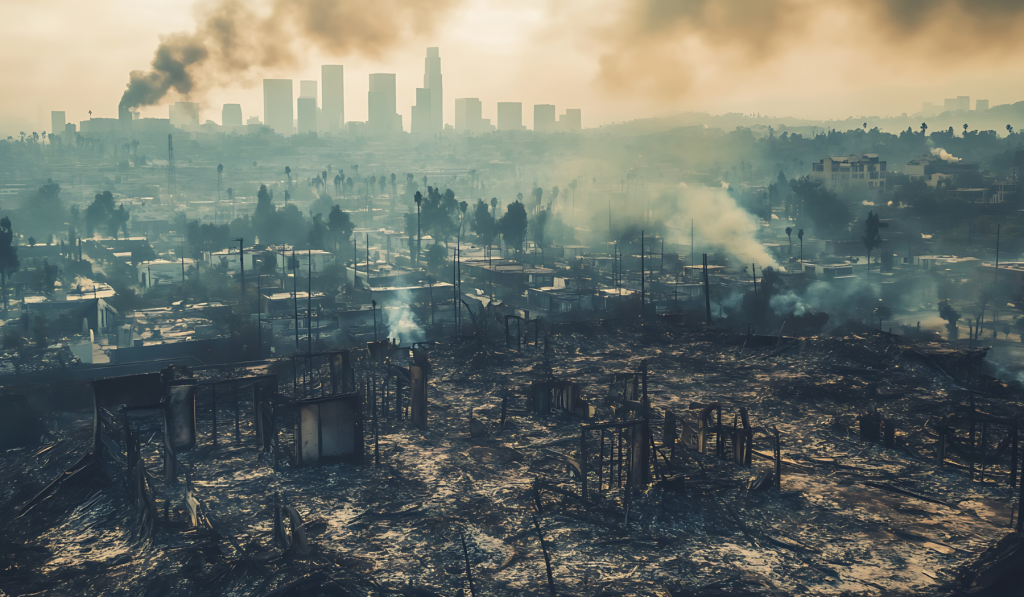
Wildfire smoke can leave long-lasting effects inside a home, impacting walls, insulation, furniture, clothing, attic spaces, and HVAC systems. Even when a property appears visually undamaged, certain issues can go unnoticed if inspections or remediation are limited. Initial cleanings or basic testing do not always identify the full extent of smoke or soot infiltration, leaving homeowners uncertain about the true condition of their property. Never let your insurance company send out representatives without you having your own expert accompanying them.
A public adjuster’s role is to help document smoke-related damage thoroughly and ensure the full scope of the loss is properly evaluated. In many homes we see, restoration teams have already completed preliminary cleanings, yet residents continue to report odors, residue, or recurring signs of smoke impact. This often raises questions about what additional inspection or remediation may be needed and what is covered under their policies.
One of the biggest challenges is that smoke travels far beyond visible surfaces. Fine particulates can migrate into wall cavities, attic decking, insulation, ductwork, and even household appliances. Because these areas are not typically examined during initial cleanings, hidden contamination may remain. These residues can influence indoor air quality, affect long-term material integrity, and create uncertainty about the true extent of damage.
A detailed evaluation helps determine whether smoke particles have moved into less accessible parts of the home and whether further cleaning or testing may be appropriate. Understanding the full extent of smoke migration allows homeowners to make informed decisions and document their claims accurately.
New Developments in California’s Wildfire Smoke Standards
California is currently evaluating updated guidelines for wildfire smoke cleanup, and the outcome may shape how both remediation and insurance claims are handled statewide. Discussions within the state’s task force have raised concerns among consumer advocates who are closely watching the process.
As the sourced article reports:
“Wildfire survivors and advocates tracking the task force’s activities fear it will effectively write the home insurance industry’s playbook for minimizing damage claims into California law, with ramifications for homeowners’ payouts – and their ability to recover from disaster – for decades to come.
‘I am very concerned about undue influence,’ said Amy Bach, one of two consumer advocates on the task force and the executive director of the advocacy group United Policyholders.
Bach said she had recommended what she considered a balanced slate of experts to the task force, including public adjusters, plaintiffs’ attorneys and consumer-focused hygienists, who test for contamination and recommend cleaning protocols. Because the final composition so leans toward insurers’ point of view, she said, ‘I do not believe this panel is in a position to issue recommended standards.’”
These discussions highlight the importance of homeowners staying informed as new guidelines take shape. Understanding smoke behavior, proper evaluation methods, and how claims are reviewed can help property owners better navigate the recovery process—especially as statewide standards evolve. If you are unsure, Ask An Adjuster! We are appointed by the State of California to represent you, not the insurance company.
For those interested in the full context and ongoing developments, you can read the complete article below.
Source: California is drafting new rules for wildfire smoke cleanup. Are home insurers calling the shots?
https://www.msn.com/en-us/news/us/california-is-drafting-new-rules-for-wildfire-smoke-cleanup-are-home-insurers-calling-the-shots/ar-AA1RMrOu#comments
